
The Great Migration in Tanzania: The Complete 2026 Safari Guide .
Experience the Great Migration Safari in Tanzania one of the world’s most breathtaking wildlife spectacles where over two million wildebeest, zebras, and Ggazelles journey across the legendary Serengeti to Maasai Mara ecosystem in search of fresh grazing and water. Recognized as Africa’s ultimate safari adventure, the Great Wildebeest Migration offers unforgettable encounters with dramatic river crossings, massive predator action, and endless plains teeming with wildlife.
The Great Migration is a year-round natural phenomenon that moves continuously across the Serengeti ecosystem, making Tanzania one of the best safari destinations in Africa for witnessing extraordinary wildlife action in every season. From the thrilling Mara River crossings in Northern Serengeti to the magical calving season in Ndutu, travelers can enjoy unmatched opportunities for luxury safaris, private game drives, and world-class wildlife photography throughout the year.
Whether you dream of seeing thousands of wildebeest crossing crocodile-filled rivers, watching newborn calves take their first steps on the Serengeti plains, or enjoying a luxury Tanzania safari surrounded by Africa’s Big Five, the Great Migration delivers the ultimate African safari experience unlike anywhere else on Earth.
Understanding the Great Migration Route & Calendar .
Many travelers ask: What time of year is the Great Migration in Tanzania? and When and where can I see the wildebeest migration easily? Understanding the timing of the Great Migration is essential when planning your Tanzania safari.
Guided by ancient instincts and seasonal rainfall patterns, more than two million wildebeest, zebra, and gazelle move continuously across the Serengeti in search of fresh pasture and water sources. This year-round wildlife spectacle creates unforgettable safari experiences in different regions throughout the year.
Knowing where the herds are during each season helps travelers choose the best time for a Serengeti safari and increases the chances of witnessing dramatic river crossings, predator action, and massive herd movements.
The Great Migration cycle can be divided into the following key periods:
December–March: Calving Season in Southern Serengeti and Ndutu
The Southern Serengeti and Ndutu region become the heart of the Great Migration calving season from December to March, when hundreds of thousands of wildebeest gather on the nutrient-rich short-grass plains to give birth. This extraordinary wildlife spectacle is one of the best safari experiences in Tanzania, attracting photographers, nature lovers, and wildlife enthusiasts from around the world.
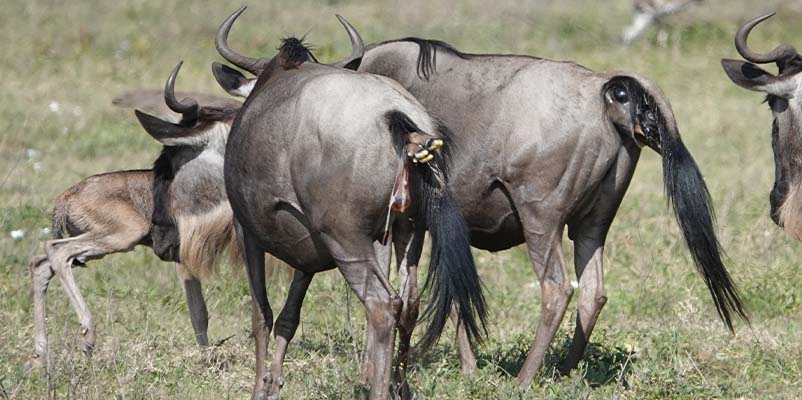
During the peak calving months of January and February, nearly 8,000 wildebeest calves are born every day across the Serengeti ecosystem. This synchronized birthing season is a natural survival strategy, as the sheer number of newborns increases their chances against predators. For visitors on a Tanzania safari, this creates thrilling wildlife encounters, with lions, cheetahs, hyenas, and leopards actively hunting across the plains.
The Great Migration calving season also offers some of the best wildlife photography opportunities in Africa. Endless golden plains, dramatic storm clouds, and massive herds of wildebeest and zebra create breathtaking landscapes, while intense predator action provides unforgettable moments for photographers. The lush scenery following the short rains adds even more beauty to the Southern Serengeti and Ndutu area.
Beyond the dramatic wildlife action, calving season is the perfect time to witness authentic animal behaviour in the Serengeti. Visitors can observe strong maternal instincts, newborn calves taking their first steps, herd protection strategies, and the delicate balance between predators and prey within the Great Migration ecosystem.
April–June: Grumeti River & Western Corridor (The Green Season)
As the green season fades and the southern plains begin to dry, the Great Migration enters one of its most underrated stages. From May to June, massive herds of wildebeest, zebra, and gazelle move westward through the Serengeti to Masai Mara ecosystem, heading toward the lush Western Corridor and Grumeti region in search of fresh grazing and permanent water sources.
For safari travellers seeking a quieter and more exclusive experience, this period offers exceptional opportunities away from the larger crowds often seen later in the migration season. The Western Corridor reveals a dramatically different side of the Serengeti — dense riverine forests, dramatic rocky kopjes, and seasonal waterways create a rich and varied landscape filled with wildlife year-round.
Unlike the fast-paced movement across the southern plains, the migration slows down in the Western Corridor, allowing for longer and more rewarding game viewing experiences. Large herds often remain in one area for days or even weeks, creating incredible chances to witness predator-prey interactions, lion prides on the hunt, leopard sightings, and enormous crocodiles waiting along the riverbanks.
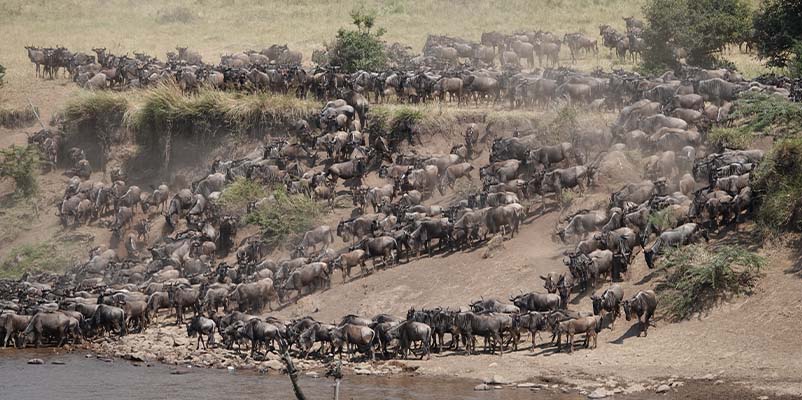
The famous Grumeti River crossings, typically occurring between May and June, are among the most dramatic highlights of a Tanzania safari. Thousands of wildebeest gather nervously at the river’s edge before making their dangerous crossing through crocodile-infested waters. While smaller in scale than the Mara River crossings, the Grumeti crossings often feel more authentic, intimate, and immersive due to the lower number of safari vehicles and visitors.
This season also delivers outstanding overall wildlife viewing across the Serengeti ecosystem. With abundant grass, reliable water, and thriving resident wildlife populations, visitors can enjoy a well-rounded safari experience that combines the Great Migration with excellent sightings of elephants, giraffes, big cats, hyenas, and countless bird species.
For travellers looking for a balance between dramatic migration action, beautiful landscapes, and fewer crowds, the Western Corridor safari season is one of the best-kept secrets in East Africa.
July–October: Mara River Crossings (Northern Serengeti)
From July through October, the northern Serengeti and Mara River region become the stage for the most dramatic phase of the Great Migration safari. Vast herds of wildebeest, zebra, and gazelle gather along the Mara River crossings, creating one of Africa’s most iconic wildlife experiences and a highlight of the Serengeti to Masai Mara ecosystem.
The Mara River crossings are the ultimate test of survival. As the migrating herds search for fresh grazing and water, they must navigate powerful currents, steep riverbanks, and enormous Nile crocodiles lying in wait beneath the surface. The crossings are unpredictable and emotionally charged, with animals sometimes gathering for hours or even days before suddenly surging across in a chaotic rush of dust, noise, and movement.
Despite the popularity of this migration season, the northern Serengeti still offers a more exclusive safari experience compared to the busier Kenyan side of the Mara ecosystem. Skilled safari guides know the best crossing points and hidden viewing areas, allowing guests to witness dramatic river crossings and predator action away from crowded vehicle traffic.
A northern Serengeti safari during migration season delivers far more than river crossings alone. Visitors can enjoy exceptional big cat sightings, including powerful lion prides, elusive leopards, and cheetahs taking advantage of the migration abundance. Combined with breathtaking landscapes, dramatic predator-prey encounters, and endless wildlife activity, this period offers one of the best safari experiences in Tanzania and East Africa.
November: Short Rains and Movement South
November signals the start of the Great Migration’s journey back toward the southern Serengeti plains, as the short rains refresh the grazing lands across the Serengeti to Masai Mara ecosystem. This transitional season is one of the best times for travellers seeking an authentic migration safari experience with fewer crowds and excellent wildlife viewing.
As fresh grass emerges in the south, the wildebeest herds gradually split into smaller groups and move southward in waves, creating rewarding game viewing opportunities across diverse landscapes. The combination of dramatic storm clouds, golden light, and active wildlife movements also makes November one of the most photogenic months for a Tanzania safari and wildlife photography.
November is also considered a great-value safari season, offering lower accommodation rates compared to peak migration months while still delivering exceptional Great Migration encounters. Many safari camps and lodges provide attractive shoulder-season offers, allowing travellers to experience the migration at a more affordable price without compromising on wildlife experiences.
Why Does the Great Wildebeest Migration Happen? .
The Great Wildebeest Migration is driven mainly by the search for fresh grazing and water across the Serengeti-Mara ecosystem. Although scientists still do not fully understand how the herds navigate such enormous distances, experts believe the movement is closely connected to seasonal rainfall patterns and the growth of nutrient-rich grass.
As the rains shift from one region to another, millions of wildebeest, zebras, and gazelles instinctively follow the new grazing areas to survive. Some wildlife researchers also suggest that wildebeest may react to distant thunderstorms and even detect rainfall from more than 50 kilometres away, helping guide their movement across the plains.
This natural cycle has continued for thousands of years, making the Great Migration one of the most extraordinary wildlife spectacles on Earth. Learn more about why the wildebeest migration occurs and discover the fascinating science behind this incredible journey
What to Expect on a Great Migration Safari in Tanzania .
A Great Migration safari is one of Africa’s most unforgettable wildlife experiences raw, emotional, and completely unpredictable. Each day brings new excitement, from sunrise game drives across endless plains to dramatic wildlife encounters that leave lasting memories.
Because the migration follows rainfall and fresh grazing, no two safaris are ever the same. The movement of the herds changes constantly, making every sighting feel unique and authentic. One moment you may witness thousands of wildebeest stretching across the horizon, and the next, a tense river crossing filled with chaos and survival.
With expertly guided game drives and strategically positioned camps, your chances of witnessing the migration’s most spectacular moments are greatly increased. You may encounter lions stalking the herds, leopards waiting silently nearby, or elephants moving peacefully through the wilderness.
Even during quieter periods, the sheer scale, beauty, and drama of the Serengeti ecosystem create an extraordinary safari experience. A Great Migration safari is not just about seeing animals it’s about experiencing nature at its wildest and most powerful.
Best Great Migration Safari Accommodations in Serengeti — Monthly Guide .
Choosing the right accommodation is one of the most important parts of planning a successful Great Migration safari in Tanzania. Since the wildebeest migration moves throughout the Serengeti ecosystem during the year, staying in the correct region at the right time greatly increases your chances of witnessing large herds, predator action, and dramatic river crossings.
Below is a month-by-month guide to the best areas and accommodations for seeing the Great Migration in Serengeti and Ndutu.
January to March – Ndutu & Southern Serengeti (Calving Season)
From early January to late March, the Great Migration settles in the Ndutu plains and Southern Serengeti. This is calving season, when hundreds of thousands of wildebeest give birth, attracting lions, cheetahs, hyenas, and other predators.
Most travellers stay in Ndutu, located in the north-western part of the Ngorongoro Conservation Area.
Recommended migration camps in Ndutu:
- • Tanzania Bush Camps – Ndutu
- • Sero Tented Camp – Ndutu
- • Ndutu Migration Camp
- • Heritage Migration Camp – Ndutu
- • Ang’ata Migration Camp – Ndutu
- • Nyikani Migration Camp – Ndutu
- • Ndutu Lodge
- • Ndutu Luxury Tented Lodge
Recommended camps in Southern Serengeti:
- • Kati Kati Migration Camp
- • Ndutu Under Canvas
- • Sanctuary Kichakani Serengeti Camp
April to Early May – Moru Kopjes & Central Serengeti
During April and early May, the migration begins moving north-west from Ndutu and Southern Serengeti toward Moru Kopjes and the south-western Serengeti.
At this time, the herds spread across a wide area, making Moru Kopjes an excellent base. Central Serengeti camps also work very well, as most migration sightings are within a 1 to 1.5hour drive.
Recommended camps in Moru Kopjes:
- • Osupuko Serengeti Camp
- • Golden Safari Camp
- • Naona Moru Camp
- • Asanja Africa
- • Ole Serai Moru Kopjes
- • Dunia Camp
- • Elewana Pioneer Camp
Why Stay in Central Serengeti?
Central Serengeti offers excellent resident wildlife year-round, including lions, leopards, elephants, and cheetahs, making it ideal for combining migration viewing with classic Serengeti game drives.
Mid May to Mid June – Western Serengeti & Grumeti Region
From mid-May to mid-June, the migration moves into the Western Serengeti around the Grumeti and Mbalageti rivers. This is one of the best seasons for dramatic landscapes, fewer crowds, and excellent predator viewing.
Recommended camps in Western Serengeti:
- • Kirawira Serena Camp
- • Mbalageti Serengeti Lodge
- • Mbugani Migration Camp
- • Serengeti Safari Camp
- • Grumeti Serengeti River Lodge
Late June to Early July – Western & Northern Serengeti
This transitional period may see herds still in the Western Corridor while others advance north. Splitting your stay between both regions maximizes migration viewing and lets you follow the movement closer.
- • Spend 2–3 nights in Western Serengeti
- • Spend 2–3 nights in Northern Serengeti
This combination provides flexibility and improves opportunities for migration sightings.
Mid July to Late September – Northern Serengeti & Mara River Crossings
From mid-July through late September, the migration reaches Northern Serengeti and the famous Mara River crossing areas.
This is the most iconic migration season, where thousands of wildebeest attempt dangerous river crossings while avoiding crocodiles and strong currents.
Most camps are located around Kogatende, while luxury camps are also found in Lamai and Wogakuria.
Recommended Camps Near Mara River
- • Tanzania Bush Camps – Migration Camp
- • Heritage Serengeti Camp – Migration Camp
- • Kati Kati Migration Camp
- • Mara Under Canvas
- • Nyikani Migration Camp
- • Lemala Kuria Hills Lodge
- • Sayari Camp
Travellers visiting Kenya can also experience the migration from camps inside or around the Masai Mara National Reserve.
October – North-Eastern Serengeti (Bologonja Area)
In October, many herds begin crossing back from Kenya into Tanzania, moving eastward toward the Bologonja region. This remote area receives fewer visitors and offers a more exclusive migration experience.
Recommended Camps in North-Eastern Serengeti
- • Ang’ata Migration Camp
- • Mbugani Migration Camp
- • Serengeti Baobab Camp – Migration Camp
- • Bologonja Under Canvas
- • andBeyond Klein’s Camp
Early November – Lobo Region
By early November, the migration moves southward through Lobo, a quieter area with beautiful rolling hills and excellent resident wildlife. This is an excellent time for travelers seeking a more intimate Serengeti experience.
Recommended Camps in Lobo Region
- • Kimbilio Safari Camp
- • Lobo Wildlife Lodge
- • Elewana Serengeti Migration Camp
Mid November to Mid December – Eastern Serengeti
During this period, the migration spreads across Eastern Serengeti before moving back toward Southern Serengeti and Ndutu. This area is known for open plains, cheetah sightings, and excellent photography.
Recommended Camps in Eastern Serengeti
- • Mawe Camp
- • Serenity Camp
- • Sametu Camp
- • Lemala Nanyukie
- • Namiri Plains
During this period, Central Serengeti camps also remain a good option, with migration herds usually within a 1 to 1.5-hour drive.
Late December – Return to Ndutu & Southern Plains
By late December, many herds begin arriving back in Ndutu and the southern plains, completing the annual migration cycle. Some animals may still remain in south-eastern Serengeti and northern Ngorongoro areas.
Recommended Camps in Ndutu and Southern Plains
- • Tanzania Bush Camps – Ndutu
- • Heritage Migration Camp – Ndutu
- • Ang’ata Migration Camp – Ndutu
- • Nyikani Migration Camp – Ndutu
- • Ndutu Lodge
- • Ndutu Luxury Tented Lodge
- • Lake Masek Tented Lodge
- • Serengeti Under Canvas – Ndutu
- • Olakira Migration Camp – Ndutu
Recommended camps in Southern Serengeti:
- • Kati Kati Migration Camp
- • Ndutu Under Canvas
- • Sanctuary Kichakani Serengeti Camp
Final Tips for Choosing Migration Accommodation .
- • The Great Migration is constantly moving and wildlife sightings can never be guaranteed.
- • Mobile migration camps usually provide the best access to the herds.
- • Combining two regions during transition months significantly improves viewing opportunities.
- • Northern Serengeti camps should be booked well in advance for July–September travel.
- • Green season months offer fewer crowds, beautiful landscapes, and excellent value.
Planning your safari around the correct migration region is the key to maximising your Great Migration experience in Tanzania.
How Much Does a Great Migration Safari Cost in Tanzania? .
One of the first things travellers ask when planning a safari is: how much does it cost? The answer varies depending on several factors, including your travel dates, accommodation type, trip duration, whether you choose a private or group safari, and the experiences you choose to include. A Great Migration safari in Tanzania typically costs between $350 and $1,500+ per person, per day. A standard 5 to 7-day migration safari usually ranges from $2,500 to $6,000+ per person, excluding international flights.
This guide breaks down the key costs involved, helping you understand what to expect and plan your safari with confidence.
1. Daily Cost Breakdown
Budget Safari ($350 – $450 per person/day)
Ideal for travellers looking for an affordable safari experience. These packages usually include:
- • Shared campsites or basic tented camps
- • Shared 4x4 safari vehicles with pop-up roofs
- • Park entrance fees
- • Full-board meals
- • Professional safari guide
Mid-Range Safari ($500 – $700 per person/day)
Perfect for travellers seeking comfort and better locations near the migration routes. These safaris often include:
- • En-suite tented camps or comfortable lodges
- • Better camp locations closer to wildlife action
- • More personalized safari experience
- • Full-board accommodation and private or semi-private game drives
Luxury Safari ($1,000 – $1,500+ per person/day)
Luxury migration safaris offer premium experiences with exclusive services such as:
- • High-end lodges or luxury mobile camps
- • Fly-in safari options
- • Exceptional guiding and personalized service
- • Fine dining, premium amenities, and prime migration locations
2. What is Included in the Safari Cost?
Most all-inclusive safari packages from local tour operators typically include:
- • Park & conservation fees
- • Private 4x4 safari vehicle with driver-guide
- • Accommodation and full-board meals
- • Unlimited game drives during the safari
3. Factors That Affect the Price
Group Size
Private safaris for couples or small groups are generally more expensive per person than shared group safaris.
Trip Duration
The longer the safari, the higher the total cost. A minimum of 5 to 7 days is recommended for a proper migration experience.
Travel Season
Peak migration periods usually cost more, especially:
- • July to October (Mara River crossing season)
- • December to March (calving season)
4. Additional Costs to Consider
Some expenses are usually excluded from safari packages:
- • International flights
- • Tanzania visa fees
- • Travel insurance
- • Tips for guides and lodge staff
- • Optional activities such as hot air balloon safaris or cultural tours
Choosing the right safari package depends on your budget, travel style, and the migration experience you want to enjoy.
How Many Days Do You Need for a Great Migration Safari? .
Choosing the right safari length is one of the most important decisions when planning your trip to Tanzania. While short safaris may seem cheaper and easier to fit into a schedule, they often feel rushed and limit your wildlife experience. A well-planned safari gives you enough time to explore multiple parks, enjoy relaxed game drives, and truly experience Africa’s wilderness without constantly moving.
Minimum Recommended Safari: 5 Days
A 5-day safari is generally considered the minimum ideal duration for travelers visiting Tanzania for the first time. It allows enough time to visit two or three major parks such as Serengeti National Park, Ngorongoro Conservation Area, or Tarangire National Park without feeling overly rushed.
With five days, you can:
- • Enjoy multiple full-day game drives
- • Increase your chances of seeing the Big Five
- • Experience different landscapes and wildlife habitats
- • Spend less time driving and more time spotting animals
This option works well for travelers with limited time who still want a rewarding safari experience.
Ideal Safari Length: 7–9 Days
For the best balance between adventure, comfort, and wildlife viewing, a 7-to-9-day safari is highly recommended. This gives you enough time to fully experience Northern Tanzania’s safari circuit at a relaxed pace.
A week-long safari allows you to:
- • Spend more time in the Serengeti
- • Follow the Great Migration more effectively
- • Include cultural experiences or walking safaris
- • Enjoy sunrise and sunset game drives
- • Reduce travel fatigue between parks
This duration is perfect for honeymooners, photographers, families, and travelers seeking a deeper connection with nature.
Luxury & Comprehensive Safari: 10–14 Days
A 10-to-14-day safari offers the ultimate Tanzania experience. It combines premier wildlife viewing with luxury lodges, exclusive camps, and slower-paced travel.
Longer safaris allow you to:
- • Explore both famous and remote parks
- • Stay in luxury tented camps
- • Experience fly-in safaris
- • Witness different ecosystems and seasonal wildlife movements
- • Combine safari with a beach holiday in Zanzibar
This option is ideal for travelers wanting a once-in-a-lifetime African safari without rushing from one destination to another.
Why Tanzania Is Better Than Kenya for a Great Migration Safari .
If your main goal is to experience the Great Migration, Tanzania is generally the better choice. Although both Tanzania and Kenya share the Serengeti-Mara ecosystem, nearly 80% of the migration takes place in Tanzania's Serengeti National Park, making it the best destination to follow the herds throughout the year.
The migration begins in the southern Serengeti, where more than 500,000 wildebeest calves are born during the calving season between January and March. As the rains and fresh grass move, the herds travel through Central and Western Serengeti before reaching the north for the famous Mara River crossings between July and October. After crossing, many animals enter Kenya's Maasai Mara National Reserve for a relatively short period before returning to Tanzania.
Another advantage is the size of the Serengeti. Covering almost 15,000 square kilometres, it is much larger than the Maasai Mara, allowing visitors to enjoy a greater sense of wilderness, more varied landscapes, and often fewer vehicles around wildlife sightings.
Tanzania also offers more migration experiences throughout the year. Visitors can witness the calving season, predator action, rutting season, Grumeti River crossings, Mara River crossings, and the return migration—all within the Serengeti ecosystem.
While Kenya is an excellent destination for travelers visiting during the Mara River crossing season, Tanzania provides a more complete migration safari experience. For those wanting to see the full journey of over 1.5 million wildebeest, zebras, and gazelles, Tanzania remains the ultimate Great Migration destination.
Family Safari: Can Children Join a Great Migration Safari? .
Yes, children can join a Great Migration safari, and it can be an unforgettable family adventure. Many lodges and tented camps in the Serengeti offer family rooms, interconnected tents, and child-friendly facilities designed for families traveling with kids.
Beyond game drives, some properties provide activities such as nature walks, wildlife education, cultural experiences, storytelling, and junior ranger programs, helping children learn about Africa’s wildlife and conservation in an engaging way.
For families with younger children, a private safari vehicle is often recommended as it offers greater flexibility for game drive times, rest breaks, and personal interests. Watching thousands of wildebeest, zebras, and gazelles move across the Serengeti is an exciting and educational experience that children often remember for a lifetime.
A family safari in Tanzania during the Great Migration combines wildlife, adventure, and education, making it one of the most rewarding family travel experiences in Africa.
Ready for the Ultimate Migration Experience?
Our expert guides specialize in tracking the herds and positioning you for the best possible wildlife sightings.
Tailor My Migration Safari